

If you're on the hunt for a butter pie crust recipe that delivers perfect results every time, this is the one. And if you've been intimidated about making a crust from scratch, don't worry--I've got you. This is my go-to pie crust; it's simple, foolproof, and endlessly versatile.
With just four ingredients that you likely already have on hand, it transforms any pie from "blah" to "ba-da-bing." It's the buttery, flaky crust foundation every great pie or quiche deserves, and it makes enough dough for two single-crust pies or one gorgeous double-crust (or lattice-topped) showstopper.
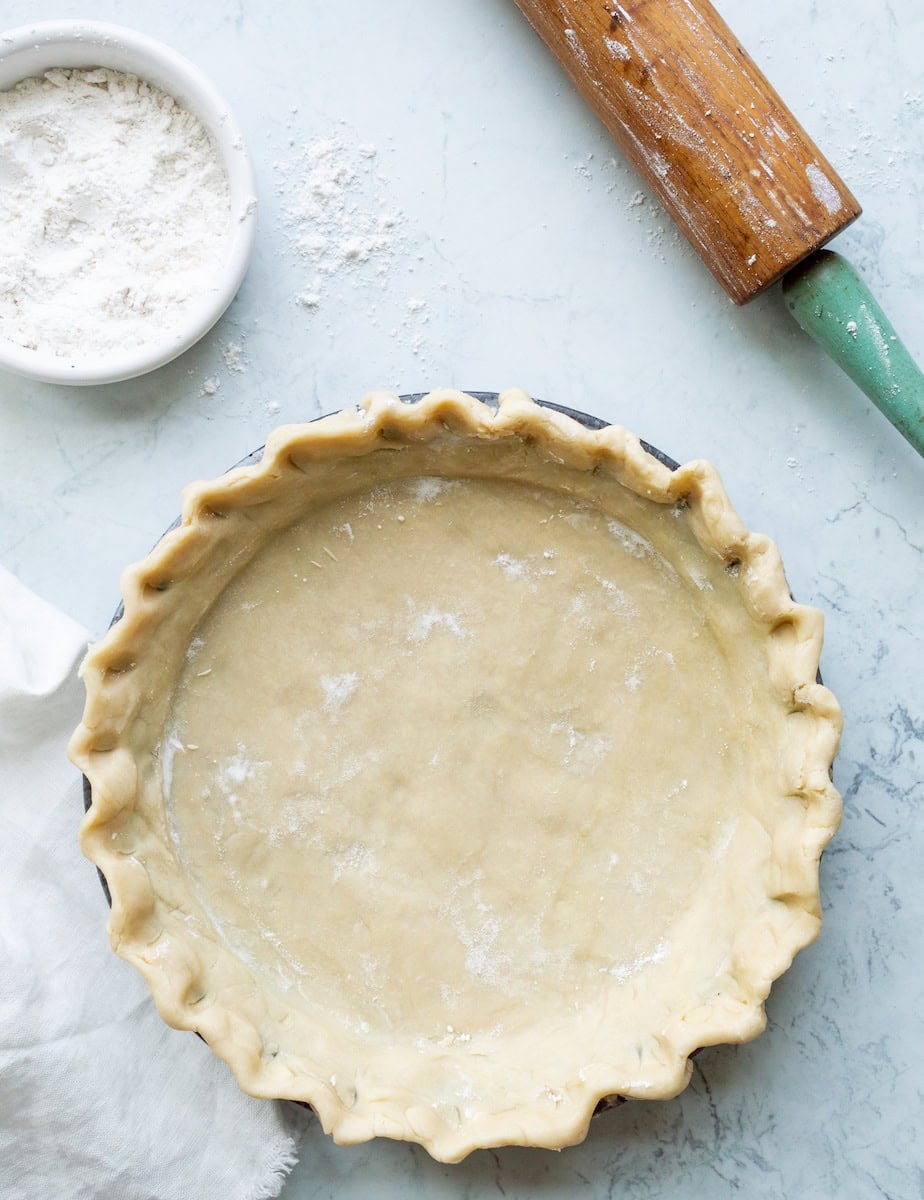

Here's what I love most about this crust: there's no sugar in the dough, so it works just as beautifully for savory pies like my green tomato pie or ham and asparagus quiche as it does for a cozy apple galette or bourbon pecan pie. It also takes my ham and cheese empanadas recipe over the top.
It's bakes up beautifully and has those irresistible, golden, flaky layers that only come from using cold, grated butter. Once you make it from scratch, you'll never go back to store-bought again. Promise.
During the holidays, I'll go ahead and make several of these crusts to have on-hand for all my baking projects. When things get hectic with Thanksgiving or Christmas dinner, I'm always thankful to have had the foresight to make this pie crust in advance. PSA: do the same thing. Future you will be so happy you did.
Ready to get started? Let's do it!
Jump to:
Ingredients
Before we get started, let's gather the ingredients we need for this homemade pie crust recipe:
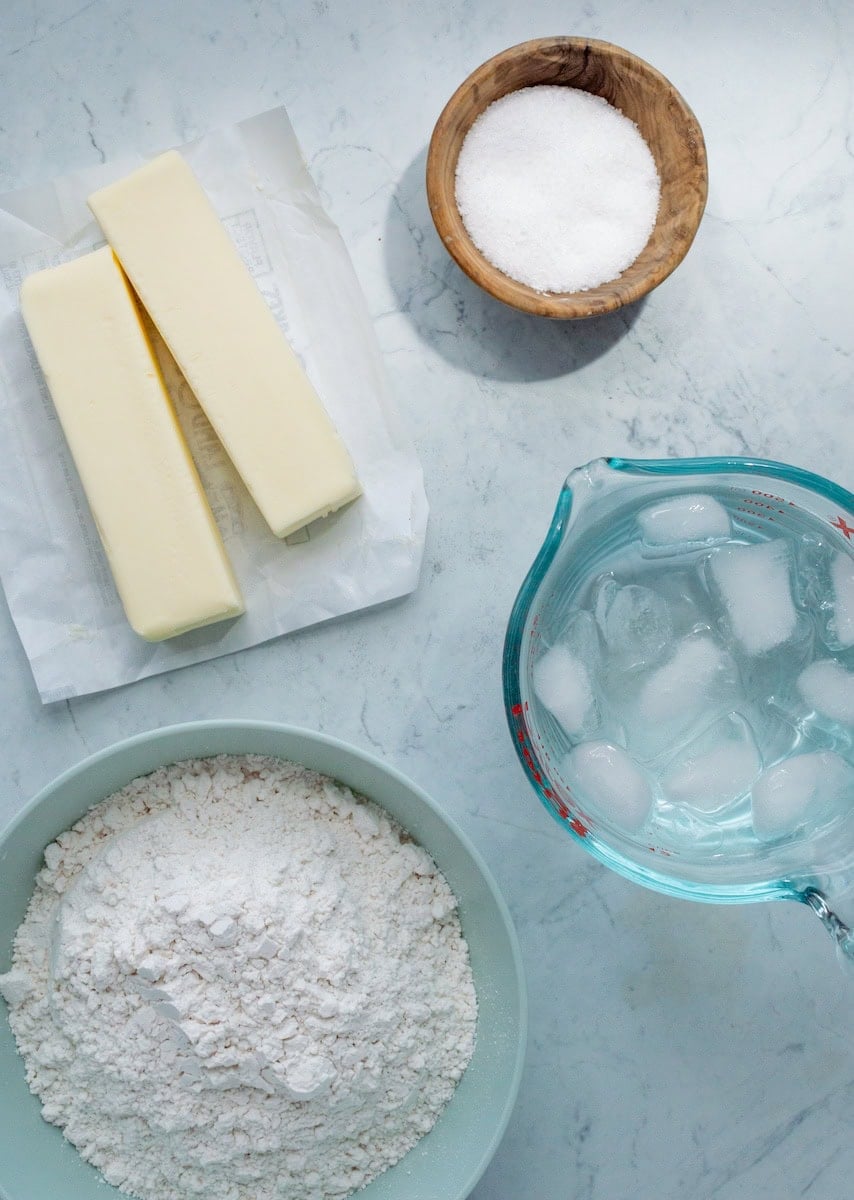
- all-purpose flour
- kosher salt
- frozen salted butter
- ice water
(See recipe card for quantities.)
Instructions
Now that we've got our ingredients, it's time to get cooking!

- First, combine the flour and salt in a large bowl. Using a box grater, grate the frozen butter.

- Then, add the butter to the flour mixture and toss to coat well.

- Next, make a well in the center of the mixture and gradually add ½ cup ice cold water, adding additional water if needed. Gently fold together the flour and water just until it forms a dough.

- Finally, divide the dough into two discs. Roll out the dough into two 11-inch circles and refrigerate until ready to use.
Hint: If you're making a double-crust pie or lattice-topped pie, roll out one dough disc into an 11-inch circle (to fit in a 9-inch pie pan) and the other in a 10-inch circle.
Hint #2: Don't be tempted to overwork the dough. That will develop the gluten and lead to a tough pie crust. Mix just until the dough comes together.
Blind Bake Instructions
When making pies with juicy fruit fillings or custard-like fillings, I recommend par-baking or blind baking the pie crust first. That will ensure the crust gets cooked through all the way--no soggy crusts allowed here!
"Dock" the crust with a fork (meaning create small holes all over the crust), cover the dough with a piece of parchment paper, and fill with pie weights or dried beans. Pro tip: bunch up the parchment paper first then unfold it--the parchment will be easier to fit into the pan.
Bake the crust at 400°F for about 15 minutes, until the edges begin to brown. Remove the baked crust from the oven and remove the parchment and the pie weights or beans.
Brush an egg wash (I like to use 1 egg yolk plus 1 teaspoon water) all over the crust to seal the holes from docking. Return the crust to the oven and bake for another 2 to 3 minutes, until the crust is no longer doughy looking. Let it cool before filling.
Note: If you are filling with a cold-set filling that doesn't require baking, you may want to bake the crust longer until it's golden brown.
Substitutions
Need to make some ingredient swaps? Here are some ideas:
- Butter - If you only have unsalted butter, that's okay. Just add about ¾ teaspoon salt to the flour instead. Avoid shortening if you want to keep that signature buttery flavor, but you can substitute up to ¼ cup with shortening for extra tenderness.
- Flour - All-purpose flour works best, but pastry flour will work in a pinch and create an even more delicate crust. You can also use whole-wheat flour. For gluten-free, use a 1:1 all-purpose gluten-free blend.
- Salt - Use fine sea salt or kosher salt and not table salt. Table salt will make the dough too salty.
Variations
This pie dough recipe is so versatile. Here are some variations:
- Sweet Pie Crust - If you'd like to use this crust for a sweet pie, add 2 tablespoons granulated sugar to the flour mixture.
- Herb Crust - Mix in 1 tablespoon finely chopped fresh herbs like rosemary, thyme, or chives for savory recipes.
- Cheddar Crust - For a cheesy twist, add ½ cup finely shredded sharp Cheddar cheese to the flour before grating in the butter. This is great for recipes like apple pie or chicken pot pie.
- Spiced Crust - Add 1 teaspoon ground cinnamon pumpkin pie spice for fall-flavored desserts.
Equipment
Here's the equipment you'll need to make this best pie crust recipe:
- dry measuring cups
- measuring spoons
- liquid measuring cup
- Rolling Pin
- large bowl
- box grater
- pastry blender (optional)
Storage
To refrigerate: Wrap each dough disc tightly in plastic wrap and refrigerate up to 3 days.
To freeze: Wrap tightly in plastic wrap and then aluminum foil and freeze for up to 3 months. Thaw overnight in the refrigerator before using.
Tasty Tip
For this recipe, heat is the enemy so it's important to keep your ingredients very cold. If needed, you can refrigerate the dough mixture as you make it. Personally, I have very warm hands so I have to do this myself. And, I live in Charleston where my kitchen can get very hot.
Frequently asked questions
Absolutely! This is a recipe a make ahead all the time, especially for holiday baking. Store it in the fridge for up to 3 days or freeze for up to 3 months.
You don't, but I prefer it for flavor. Unsalted butter works too, you'll just need to increase the salt slightly.
You can but try and avoid over-pulsing. Pulse just until the dough comes together (not yet a ball). You still want visible butter pieces.
I've had so many dough balls turn into amoeba shapes. The best way to ensure a round circle is to roll the dough from the center outward, turning the dough a quarter turn after every few rolls.
Yes! And I recommend you do so for juicy or custard fillings. (That'll prevent soggy bottoms--a Paul Hollywood no-no.) For blind baking, line the crust with a sheet of parchment paper and pie weights and bake at 375°F for 15 to 20 minutes, remove weights, and bake 5 minutes more or until the crust is completely cooked through.
It sounds like your dough is too dry. It sounds like your dough is too dry. Add a little water, 1 tablespoon at a time until it just comes together.
Use extra flour for dusting as you're rolling it out. The dough may also be too warm. Pop it in the fridge to chill a little longer before rolling.
All the dough to rest before using it. An hour in the fridge before baking is ideal. Also, when you fit the crust in your pie dish, don't stretch it. Roll it out so there's plenty of overhang so it'll fit easily in the pan. That'll prevent shrinking too.
Related
Looking for other recipes like this? Try these:


Pairing
These are my favorite dishes to serve with recipes that use this butter pie dough:




🍽Get the recipe
Flaky All Butter Pie Crust Recipe (Makes 2 Crusts)
Equipment
- dry measuring cups
- measuring spoons
- liquid measuring cup
- Rolling Pin
- large bowl
- box grater
Ingredients
- 2 ½ cups all-purpose flour, plus more for rolling
- ½ teaspoon fine kosher salt
- 1 cup frozen salted butter
- ½ cup ice cold water (plus 2 tablespoons if needed)
Instructions
- Combine the flour and salt in a large bowl. Using the large holes of a box grater, grate the frozen butter.
- Add the butter to the flour and toss to coat completely.
- Make a well in the center of the flour mixture and gradually add the cold water, beginning with ½ cup and adding additional water if needed.
- Gently fold together the flour and water just until it forms a dough. (Use a fork or pastry cutter if desired). Divide the dough into two discs.
- Roll out one disc into an 11-inch circle on a lightly floured surface. (If making a lattice-topped or double-crust pie, roll the other disc into a 10-inch circle, place on a large baking sheet, and refrigerate.)
- When ready to use, fit the dough into a 9-inch pie plate, crimp the edges, and refrigerate until ready to fill.
Video
Notes
- Keep all the ingredients extremely cold, especially the butter (frozen is best).
- Cold butter is less likely to mix into the flour, so solid pieces of butter create separate layers. When the dough is added to a hot oven, the little pieces of butter melt and the small amount of water in the butter evaporates, leaving little air pockets that translate into flaky layers of crust. If the butter isn't cold enough to begin with and mixes in with the flour, the dough becomes less likely to rise.
- Try not to be tempted to overwork your dough when combining the water with flour and butter mixture. If there are a few dry spots that's okay. The water will eventually absorb into the flour as it sits.
Recipe guidelines and test kitchen tips
When developing and testing recipes, here are some key things that I do for more success in the kitchen:
- Be sure to use dry measuring cups for things like flour, sugar, and mayonnaise and a liquid measuring cup for things like water, milk, and broth.
- When measuring dry ingredients like flour and powdered sugar that can pack down, spoon the ingredient into a dry measuring cup and level with a knife as opposed to scooping the measuring cup into the ingredient.
- I test and develop recipes using a standard electric oven and standard gas stovetop. Be aware that if you use an electric stovetop or convection oven, your bake times will be different.
- When recipes call for kosher salt, I use Diamond Crystal kosher salt.
Food safety
Keep these few food safety things in mind when making this recipe
- Don't leave leftovers sitting out at room temperature for extended periods.
- Never leave cooking food unattended.
- Always have good ventilation when using a gas stove.

Emma Mullar says
This flaky all-butter pie crust recipe looks fantastic! I love that it uses simple ingredients while creating such a tender, buttery, and perfectly crisp crust. Making two crusts at once is especially convenient for pies with top and bottom layers or for saving one for later. The detailed instructions make it feel approachable even for beginner bakers. I can't wait to try this recipe for my next homemade pie!
Elaine says
I've used this pie crust recipe a number of times. It never fails and is my go to for both quiches and other savory pies.
Martha says
This crust recipe for easy to make! I have always felt intimidated doing it myself. Thanks for sharing!
Rob says
This pie crust recipe has become my go-to. I've made blueberry, apple and cherry pies with it so far, and the crust is always flaky. Grating the butter really helps get a flaky crust.
Tara says
I didnt know how easy it was to make pie crust at home. The crust turned out so good with flaky layers and perfectly done.This is going to be my go to recipe from now on!
Liz says
This crust recipe worked perfectly! And the butter gave such wonderful flavor.