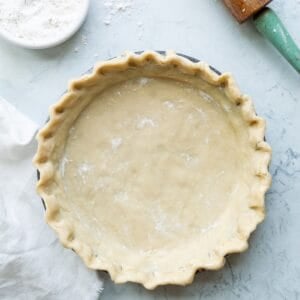
Flaky All Butter Pie Crust Recipe (Makes 2 Crusts)
This homemade butter pie crust is my go-to for everything from sweet fruit pies to savory quiches. With just four simple ingredients, it bakes up golden, tender, and perfectly crisp every time. It's proof that from-scratch really does make all the difference.
Print
Pin
Servings: 2 crusts
Equipment
- dry measuring cups
- measuring spoons
- liquid measuring cup
- Rolling Pin
- large bowl
- box grater
Ingredients
- 2 ½ cups all-purpose flour, plus more for rolling
- ½ teaspoon fine kosher salt
- 1 cup frozen salted butter
- ½ cup ice cold water (plus 2 tablespoons if needed)
Instructions
- Combine the flour and salt in a large bowl. Using the large holes of a box grater, grate the frozen butter.
- Add the butter to the flour and toss to coat completely.
- Make a well in the center of the flour mixture and gradually add the cold water, beginning with ½ cup and adding additional water if needed.
- Gently fold together the flour and water just until it forms a dough. (Use a fork or pastry cutter if desired). Divide the dough into two discs.
- Roll out one disc into an 11-inch circle on a lightly floured surface. (If making a lattice-topped or double-crust pie, roll the other disc into a 10-inch circle, place on a large baking sheet, and refrigerate.)
- When ready to use, fit the dough into a 9-inch pie plate, crimp the edges, and refrigerate until ready to fill.
Video
Notes
- Keep all the ingredients extremely cold, especially the butter (frozen is best).
- Cold butter is less likely to mix into the flour, so solid pieces of butter create separate layers. When the dough is added to a hot oven, the little pieces of butter melt and the small amount of water in the butter evaporates, leaving little air pockets that translate into flaky layers of crust. If the butter isn’t cold enough to begin with and mixes in with the flour, the dough becomes less likely to rise.
- Try not to be tempted to overwork your dough when combining the water with flour and butter mixture. If there are a few dry spots that’s okay. The water will eventually absorb into the flour as it sits.